K53 Restriction Signs: South African Roads
Understanding road signs isn’t just about passing your K53 learner’s licence test – it’s fundamental to safe, legal, and stress-free driving in South Africa. Among the most crucial are Restriction Signs. These signs impose specific limits or conditions on road users, dictating what you cannot do, where you cannot do it, and sometimes when those rules apply. Ignoring them can lead to fines, accidents, or even impoundment. Let’s break down the common K53 restriction signs you’ll encounter, including those specifying when and to whom the rules apply.
Why Restriction Signs Matter
Restriction signs, governed by the National Road Traffic Act (NRTA) and Regulations, are vital for:
-
Safety: Preventing conflicts (e.g., no overtaking on dangerous bends), protecting vulnerable road users (e.g., pedestrian-only zones), and managing speed.
-
Traffic Flow: Ensuring smooth movement (e.g., no stopping in rush-hour lanes, managing truck routes).
-
Access Control: Regulating vehicle types in sensitive areas (e.g., residential zones, historic districts).
-
Infrastructure Protection: Preventing damage from overweight or oversized vehicles.
-
Parking Management: Ensuring fair access, preventing obstructions, and generating revenue where applicable.
Decoding the Signs: Time, Place, and Vehicle Specifics
Many restriction signs work in conjunction with supplementary plates placed directly below them. These plates provide essential details about when the restriction applies or to which vehicles it applies. Here’s a detailed look at the common K53 restriction signs and their supplementary plates:
K53 Restriction Signs
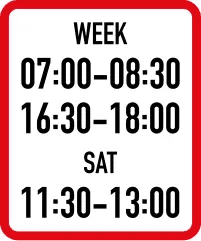
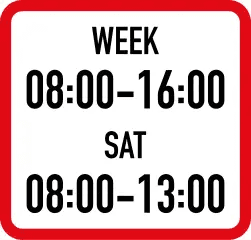
1. Specified Days and Hours (Multiple Variations)
-
-
Sign Appearance: A rectangular white plate with a black border. Black lettering states the specific days (e.g., “MON-FRI”, “SAT”, “SUN”, “PUBLIC HOLIDAYS”) and times (e.g., “07:00-18:00”, “06:30-08:30 & 15:30-17:30”).
-
Meaning: The restriction shown on the sign above this plate ONLY applies during the exact days and hours stated. Outside these times, the restriction is NOT in force.
-
Example: A “NO STOPPING” sign with a plate “MON-FRI 07:00-09:00 & 16:00-18:00” means you cannot stop there during those specific morning and afternoon peak hours on weekdays. Stopping is allowed at other times, including weekends and public holidays (unless another restriction applies).
-
K53 Focus: Crucial for identifying when prohibitions like No Stopping, No Parking, Speed Limits, or No Entry are active. Test scenarios often involve judging legality based on the time/day.
-
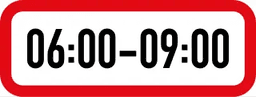
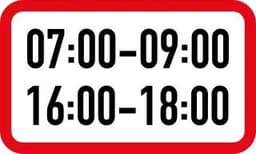
2. Specified Hours (Version 1 & 2)
-
-
Sign Appearance: Similar to the day/time plate, but only times are shown (e.g., “07:00-17:00”, “08:00-13:00”). Versions are functionally identical; the difference is purely in the example times used in the K53 manual. The key is the absence of days.
-
Meaning: The restriction on the sign above ONLY applies during the specific hours stated, every day of the week. Outside these hours, the restriction is lifted.
-
Example: A “60” km/h speed limit sign with a plate “06:00-20:00” means you must drive at 60 km/h or less between 6 AM and 8 PM daily. Outside these hours (e.g., late at night), the default speed limit for that road type would apply (e.g., 80 km/h or 100 km/h urban/peri-urban).
-
K53 Focus: Tests understanding that the restriction is time-bound daily, regardless of the day of the week.
-
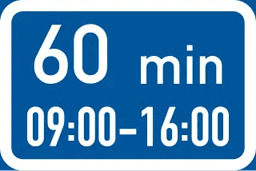
3. Parking is Permitted Within the Hours Specified, with a 60-Minute Limit
-
-
Sign Appearance: A rectangular white plate with a black border. Black lettering states the permitted hours and includes the crucial “60 MIN” or “1 HR” limit (e.g., “08:00-17:00 60 MIN”, “MON-SAT 09:00-16:00 1 HR”).
-
Meaning: This plate modifies a parking sign (often a blue “P” sign or sometimes a “NO PARKING” sign with an exception plate). It means:
-
You ARE allowed to park within the hours specified.
-
BUT, you MUST NOT park for longer than 60 minutes (1 hour) at a time during those hours.
-
Parking outside the specified hours may be prohibited or subject to different rules.
-
-
K53 Focus: Understanding the dual condition: time window and duration limit. Essential for avoiding “overstay” parking fines. Knows how to use a parking disc if required.
-
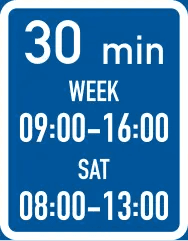
4. Parking is Permitted Within the Days and Hours Specified, with a 30-Minute Limit
-
-
Sign Appearance: Similar to the 60-minute plate, but specifies “30 MIN” and includes days (e.g., “MON-FRI 08:00-17:00 30 MIN”, “SAT 09:00-13:00 30 MIN”).
-
Meaning: Exactly like the 60-minute plate, but the maximum allowed parking time during the specified days and hours is only 30 minutes.
-
K53 Focus: Recognizing the stricter time limit. Often found near shops, post offices, or quick-drop zones.
-
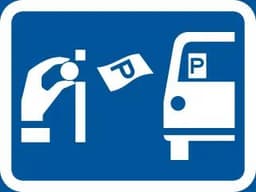
5. Pay and Display Parking
-
-
Sign Appearance: A rectangular white plate with a black border. Black lettering clearly states “PAY AND DISPLAY” or sometimes just “PAY”.
-
Meaning: Parking within the zone or bay indicated (usually by accompanying lines or signs) is ONLY permitted if:
-
You pay at a nearby machine/kiosk for the time you intend to park.
-
You obtain a ticket/receipt.
-
You clearly display this ticket/receipt on your vehicle’s dashboard or windscreen where it’s visible from outside.
-
-
K53 Focus: Knowing the mandatory process: Pay -> Get Ticket -> Display Ticket. Failure at any step usually results in a fine. Understands this overrides free parking, even if within time limits.
-
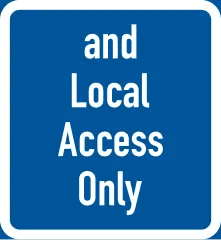
6. Traffic Requiring Local Access Also Permitted
-
-
Sign Appearance: A rectangular white plate with a black border. Black lettering states “TRAFFIC REQUIRING LOCAL ACCESS ALSO PERMITTED”.
-
Meaning: This plate modifies a restrictive sign (commonly “NO THROUGH ROAD”, “NO ENTRY” for certain vehicles, or “ACCESS ONLY”). It means:
-
The general restriction (e.g., no entry) applies to through traffic.
-
However, vehicles whose destination is within the restricted zone (e.g., residents, deliveries to businesses, visitors going to a specific address) ARE permitted to enter/use the road solely to reach that destination.
-
-
K53 Focus: Critical distinction between through traffic and access traffic. You must have a legitimate reason to be entering the zone beyond just passing through.
-
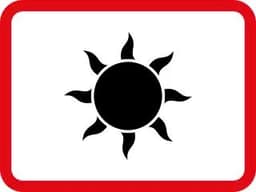
7. Applies During the Day-Time Hours
-
-
Sign Appearance: A rectangular white plate with a black border. Black lettering typically states “DAYTIME” or shows sun symbols/sunrise-sunset icons (less common textually than the specific hour plates, but part of the K53 scope).
-
Meaning: The restriction on the sign above ONLY applies during daylight hours. The exact definition of “daytime” is usually based on official sunrise to sunset times.
-
K53 Focus: Understanding that the restriction is not in force at night. Often used with speed limits in sensitive areas or loading restrictions.
-
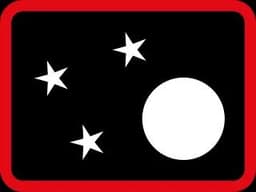
8. Applies During the Night-Time Hours
-
-
Sign Appearance: A rectangular white plate with a black border. Black lettering typically states “NIGHTTIME” or shows moon symbols.
-
Meaning: The restriction on the sign above ONLY applies during the hours of darkness (sunset to sunrise).
-
K53 Focus: Opposite of the daytime plate. Crucial for signs like speed limits near hospitals or residential areas that are stricter only at night to minimise noise.
-
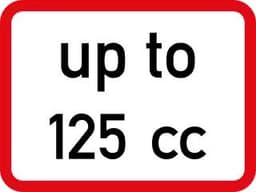
9. Applies to Motorcycles with an Engine Size up to 125 cc
-
-
Sign Appearance: A rectangular white plate with a black border. Black lettering states “APPLIES TO MOTORCYCLES UP TO 125 cc” or shows a motorcycle symbol with “125 cc”.
-
Meaning: The restriction or instruction on the sign above applies specifically and only to motorcycles with an engine capacity of 125 cubic centimetres or less. Larger motorcycles and other vehicles are not affected by this specific restriction.
-
K53 Focus: Recognizing vehicle-specific restrictions. Common where smaller bikes might be permitted (e.g., in bus lanes, certain access roads) where larger bikes or cars are not.
-
10. Applies to the Left and Right
-
-
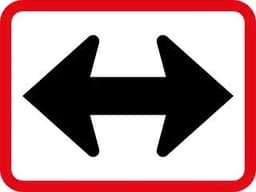
Sign Appearance: Rectangular white plates with black borders.
-
Applies to the Left and Right: Features arrows pointing both left and right, or text “APPLIES LEFT AND RIGHT”.
-
Applies to the Left: Features an arrow pointing left, or text “APPLIES LEFT”.
-
Applies to the Right: Features an arrow pointing right, or text “APPLIES RIGHT”.
-
-
Meaning: These plates clarify the direction or side of the road to which the main restriction sign applies.
-
Left/Right: The restriction applies only to traffic moving in the indicated direction (e.g., a “NO OVERTAKING” sign with “APPLIES LEFT” means no overtaking for traffic going left).
-
Left and Right: The restriction applies to traffic moving in both directions on that road (e.g., a “NO STOPPING” sign with “APPLIES LEFT AND RIGHT” means no stopping on either side of the road).
-
-
K53 Focus: Vital for spatial understanding. Prevents misapplication of rules (e.g., thinking a “No Stopping” applies only to your side when it applies to both). Pay close attention to the arrow direction relative to your travel path.
-
11. Applies to Vehicles Exceeding 16 Tonnes GVM
-
-
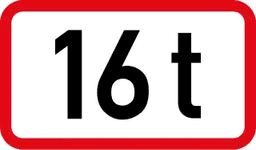
Sign Appearance: A rectangular white plate with a black border. Features a symbol of a heavy vehicle (truck) and “>16T” or text “APPLIES TO VEHICLES EXCEEDING 16 T GVM”.
-
Meaning: The restriction on the sign above (e.g., “NO ENTRY”, “PROHIBITED”, specific speed limit, “NO OVERTAKING”) applies only to vehicles with a Gross Vehicle Mass (GVM) greater than 16 tonnes. GVM is the maximum weight the vehicle is legally allowed to weigh when fully loaded, as specified by the manufacturer. Vehicles under 16 tonnes GVM are not subject to this specific restriction.
-
K53 Focus: Understanding weight-based restrictions, crucial for truck drivers but also for car drivers to know when they are exempt. Knows GVM definition.
-
Key Takeaways for K53 and Safe Driving
-
Read the Whole Sign Assembly: Never just look at the main sign. Always check for supplementary plates below it – they drastically alter the meaning and application.
-
Time is Critical: A huge number of fines result from missing time restrictions. Know the difference between day/time-specific, daily-hour-specific, daytime, and nighttime applications.
-
Know Your Limits: Understand parking duration limits (30min vs 60min) and the mandatory process for Pay and Display.
-
Access vs Through Traffic: “Local Access Permitted” doesn’t mean open slather; you need a valid destination within the zone.
-
Direction Matters: Arrows on plates tell you exactly where the rule applies – left, right, or both.
-
Vehicle Specificity: Restrictions can target specific vehicle types (like >16T trucks or <=125cc bikes). Know if it applies to you.
-
Compliance is Non-Negotiable: These signs exist for safety and order. Disregarding them risks accidents, congestion, and significant fines under the NRTA.
By thoroughly understanding these K53 restriction signs and their supplementary plates, you demonstrate the knowledge needed to pass your learner’s test and, far more importantly, you equip yourself to be a safer, more responsible, and law-abiding driver on South Africa’s diverse roads. Always stay alert, read the signs completely, and drive according to the conditions they communicate. Safe travels!